欢迎您访问中国氢能与燃料电池网


2026-09-01 来源:良牧云农业科技 浏览数:85
2026年8月,山东省农业农村厅发布《关于做好2026年山东省乡村振兴科技创新提振行动计划项目申报工作的通知》,首次将氢农业与人
2026年8月,山东省农业农村厅发布《关于做好2026年山东省乡村振兴科技创新提振行动计划项目申报工作的通知》,首次将"氢农业"与"人工智能+农业""农业智能机器人""农业生物制造""绿色低碳循环农业"并列,纳入"农业新质生产力应用场景创新示范"重点方向。这标志着氢农业从实验室探索正式走向省级产业政策的主舞台。良牧云光储氢食用菌种植方舱作为国内少数将"光伏—储能—富氢施用—智能环控"全链条集成于标准化方舱的装备,为氢农业落地提供了可复制、可推广的典型范式。
August 2026. Shandong Provincial Department of Agriculture and Rural Affairs issued theNotice on Application for Projects under the 2026 Shandong Rural Revitalization Science and Technology Innovation Boost Action Plan. For the first time, “hydrogen‑enabled agriculture” was listed alongside “AI‑powered agriculture”, “intelligent agricultural robots”, “agricultural bio‑manufacturing” and “green low‑carbon circular agriculture” as key priorities forinnovation demonstration of application scenarios for new‑quality productive forces in agriculture. This marks that hydrogen‑enabled agriculture has moved from laboratory‑scale exploration onto the main stage of provincial‑level industrial policy. As one of the few domestic standardized shelter‑integrated facilities featuring the full‑chain integration of “photovoltaic power generation‑energy storage‑hydrogen‑enriched application‑intelligent environmental control”, the Liangmuyun PV‑Storage‑Hydrogen Edible‑Fungus Cultivation Shelter delivers a replicable and promotable typical model for the implementation of hydrogen‑enabled agriculture.

1.政策导向:氢农业成为农业新质生产力重点赛道
Policy Orientation: Hydrogen‑Enabled Agriculture Becomes a Key Track for New‑Quality Productive Forces in Agriculture
山东省乡村振兴科技创新提振行动计划明确提出,要"聚焦农业产业科技创新前沿领域,以氢农业、人工智能+农业、农业智能机器人、农业生物制造、绿色低碳循环农业等为重点,开展技术集成、场景创新和产业化示范,打造农业新质生产力典型应用场景"。
The Shandong Rural Revitalization Science and Technology Innovation Boost Action Plan explicitly states:Focus on cutting‑edge fields of agricultural industrial science‑and‑technology innovation. Prioritize hydrogen‑enabled agriculture, AI‑powered agriculture, intelligent agricultural robots, agricultural bio‑manufacturing, green low‑carbon circular agriculture and other fields to carry out technology integration, scenario‑based innovation and industrial demonstration, and build typical application scenarios for new‑quality productive forces in agriculture.
将氢农业列入省级科技提振行动计划,具有三重政策含义:
Including hydrogen‑enabled agriculture in the provincial science‑and‑technology boost action plan carries three‑fold policy implications:
技术定位升级:氢气不再仅被视为工业能源,而是作为一种新型气体信号分子和植物生理调节剂,被纳入农业生产要素体系。
场景导向明确:政策强调"应用场景创新示范",要求技术必须落地到具体作物、具体装备和具体经营主体,而非停留在论文层面。
绿色低碳协同:氢农业与绿色低碳循环农业并列,体现了"以绿氢替代化石能源、以氢肥替代部分化肥"的双碳战略意图。
Upgraded technological positioning:Hydrogen is no longer regarded merely as an industrial energy source. Instead, as a novel gaseous signaling molecule and plant physiological regulator, it has been incorporated into the system of agricultural production factors.
Clear scenario‑driven guidance:The policy emphasizes “innovation demonstration of application scenarios”, requiring technologies to be deployed in specific crops, equipment and business entities rather than remaining confined to academic papers.
Green and low‑carbon synergy:Hydrogen‑enabled agriculture is listed side‑by‑side with green low‑carbon circular agriculture, reflecting the dual‑carbon strategic objective of “replacing fossil energy with green hydrogen and partially substituting chemical fertilizers with hydrogen‑based fertilization”.
山东是食用菌生产大省,年产销量居全国前列,但传统菇房普遍存在能耗高、抗逆弱、品质波动大等痛点。以食用菌方舱为载体推进氢农业示范,既契合山东产业基础,又能快速验证技术经济性。
Shandong is a major edible‑fungus producing province with national‑leading annual output and sales volume. Nevertheless, traditional mushroom houses commonly suffer high energy consumption, weak stress resistance and volatile product quality. Promoting demonstrations of hydrogen‑enabled agriculture via edible‑fungus shelters fits well with Shandong’s industrial foundation and enables rapid verification of technical cost‑effectiveness.
2.氢农业的科学原理与应用价值
Scientific Principles and Application Value of Hydrogen‑Enabled Agriculture
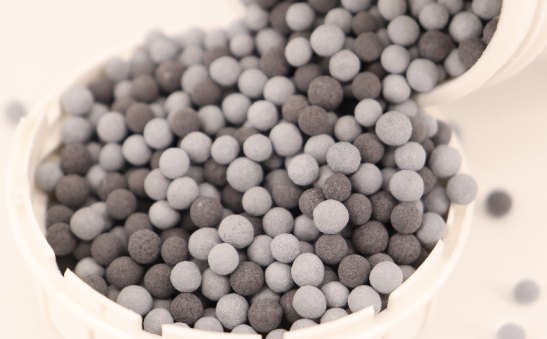
氢农业(Hydrogen Agriculture)是以分子氢(H₂)为核心投入品,通过富氢水灌溉、氢气熏蒸或土壤施氢等方式,调控作物生理代谢、改善根际微生态的新型农业技术。氢气不含氮、磷、钾,并非传统意义上的肥料,其核心作用是"调节、抗逆、促生"。
Hydrogen‑enabled Agriculture is an innovative agricultural technology that takes molecular hydrogen (H₂) as a core input. It regulates crop physiological metabolism and improves rhizosphere micro‑ecology via approaches such as hydrogen‑rich water irrigation, hydrogen gas fumigation or soil hydrogen application. Containing no nitrogen, phosphorus or potassium, hydrogen is not fertilizer in the conventional sense. Its core functions lie inphysiological regulation, stress resistance improvement and growth promotion.
2.1作用机理Mechanisms of Action
信号分子调控:氢气是一种新型气体信号分子,可参与调控植物内源激素(如生长素、脱落酸)的合成与转运,促进根系发育和养分吸收。
选择性抗氧化:氢分子可选择性清除作物体内过量的活性氧自由基(ROS),提升SOD、ATP酶活性,增强抗旱、抗低温、抗盐碱和抗病害能力。
根际微生态改善:氢气促进土壤中氢氧化细菌(HOB)富集,部分菌种具有植物促生作用,可改善土壤菌群结构、减缓有机质降解,从而起到"氢肥"效应。
品质提升:多项田间试验表明,施氢可提升作物可溶性固形物、维生素C等品质指标,降低重金属富集风险。
Signaling‑molecule regulation:As a novel gaseous signaling molecule, hydrogen participates in regulating the synthesis and translocation of plant endogenous phytohormones (e.g. auxin and abscisic acid), boosting root development and nutrient uptake.
Selective anti‑oxidation:Hydrogen molecules selectively scavenge excess reactive oxygen species (ROS) in crops, raise the activity of SOD and ATPase, and enhance resistance to drought, low temperature, saline‑alkali stress and diseases.
Rhizosphere micro‑ecology improvement:Hydrogen facilitates the enrichment of hydrogen‑oxidizing bacteria (HOB) in soil. Some strains exert plant‑growth‑promoting effects, optimizing soil flora structure and slowing organic‑matter degradation, thereby generating a “hydrogen‑fertilizer” effect.
Quality enhancement:Multiple field trials verify that hydrogen application raises quality indicators including soluble solids and vitamin C, and lowers risks of heavy‑metal accumulation in crops.
2.2已验证的应用成效Verified Application Outcomes
据公开文献与产业白皮书数据,氢农业在多种作物上已显示出稳定效果:水稻田间试验中,分子氢处理使籽粒产量提升18.8%—24.7%,直链淀粉含量提升8.5%—11.2%,垩白粒率下降;设施蔬菜与经济作物上,化肥农药投入可减少20%—30%,作物抗逆性显著增强。对于食用菌这类对环境因子高度敏感、生长周期短的作物,氢气在促进菌丝生长、抑制杂菌、提升出菇整齐度方面具有独特潜力。
According to published literature and industrial white‑paper data, hydrogen‑enabled agriculture yields stable effects across diverse crops: in rice field trials, molecular‑hydrogen treatment increased grain yield by 18.8%‑24.7%, raised amylose content by 8.5%‑11.2%, and reduced chalky grain rate. For facility‑grown vegetables and cash crops, chemical fertilizer and pesticide inputs can be cut by 20%‑30%, accompanied by markedly enhanced stress tolerance. For edible fungi — highly sensitive to environmental factors with short growth cycles — hydrogen exhibits unique potential in accelerating mycelial growth, suppressing contaminant fungi and improving fruiting uniformity.
3.良牧云光储氢食用菌种植方舱技术解析
Technical Analysis of Liangmuyun PV‑Storage‑Hydrogen Edible‑Fungus Cultivation Shelter
良牧云光储氢食用菌种植方舱是将"绿氢制备—富氢施用—智能环控—立体栽培"深度集成的标准化种植装备,以集装箱级方舱为载体,实现食用菌的工业化、全年化、低碳化生产。
The Liangmuyun PV‑Storage‑Hydrogen Edible‑Fungus Cultivation Shelter is a standardized cultivation facility with deep integration of “green hydrogen production‑hydrogen‑enriched application‑intelligent environmental control‑multi‑layer stereoscopic cultivation”. Built upon container‑grade shelters, it realizes industrialized, year‑round and low‑carbon edible‑fungus production.
3.1光储氢一体化能源系统PV‑Storage‑Hydrogen Integrated Energy System
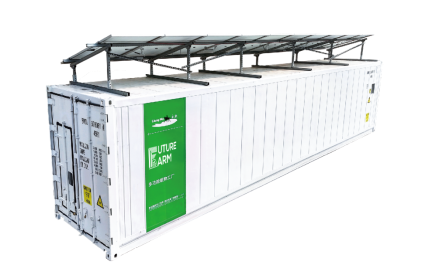
方舱顶部及配套阵列部署光伏发电板,结合储能电池构成"自发自用"的微能源系统。当光伏出力大于方舱负荷时;当夜间或阴雨天光伏不足时,储能电池优先保障环控系统运行,氢气则按需释放进入施用环节。该架构实现了"光—储—氢"的能量梯级利用,使方舱在离网或弱网场景下也能稳定运行,同时大幅降低对市电的依赖。
Photovoltaic panels are installed on shelter rooftops and supporting arrays. Together with energy‑storage batteries, they form a self‑consumption micro‑energy system. When photovoltaic output exceeds shelter load, surplus energy is used for hydrogen production. At night or on overcast days with insufficient photovoltaic generation, energy‑storage batteries prioritize powering the environmental‑control system, and hydrogen is released on demand for application. This architecture achieves cascaded energy utilization of “photovoltaics‑energy storage‑hydrogen”. Shelters can operate stably even in off‑grid or weak‑grid conditions and substantially reduce dependence on municipal power supply.
3.2富氢水与氢气精准施用系统Precision Application System for Hydrogen‑Rich Water and Hydrogen Gas
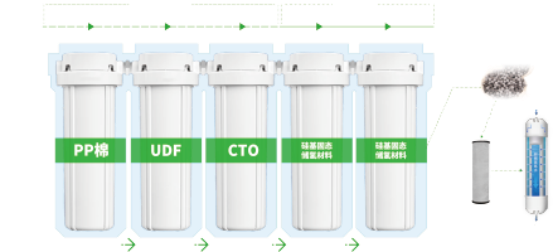
这是方舱区别于普通智慧菇房的核心模块。系统将电解制备的氢气通过两条路径作用于食用菌:
This core module differentiates the shelter from ordinary smart mushroom houses. Electrolytically‑produced hydrogen acts on edible fungi through two pathways:
富氢水灌溉:氢气经气液混合装置溶解于灌溉水中,形成稳定浓度的富氢水,通过雾化喷淋系统均匀作用于菌包表面和培养料,促进菌丝生长、抑制杂菌污染。
氢气环境调控:在出菇关键期,按预设浓度向舱内补充微量氢气,结合通风系统维持稳定的氢气浓度区间,调控子实体分化与发育。
Hydrogen‑rich water irrigation:Hydrogen is dissolved in irrigation water via gas‑liquid mixing devices to produce stabilized hydrogen‑rich water. Atomized sprinkler systems deliver it evenly onto mushroom bags and culture substrates to accelerate mycelial growth and suppress contaminant‑fungi contamination.
Hydrogen gas environmental modulation:At critical fruiting stages, trace hydrogen gas is supplemented into shelters at preset concentrations. Ventilation systems maintain stable hydrogen‑concentration ranges to modulate the differentiation and development of fruiting bodies.
施用浓度、时机和持续时间由控制系统按菌种生长模型自动匹配,避免"氢浓度过高反而抑制生长"的常见误区。
Control systems automatically match hydrogen concentration, timing and duration to strain‑specific growth models, avoiding the common pitfall that excessive hydrogen inhibits growth.
3.3智能环控与立体栽培系统Intelligent Environmental Control and Stereoscopic Cultivation System
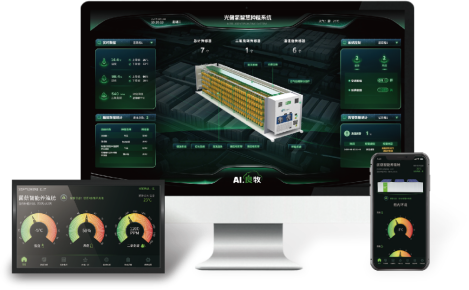
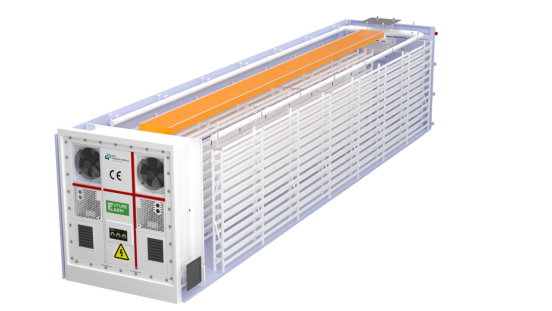
方舱内部采用多层立体栽培架,单舱约30平方米空间可容纳4000余个菌包,土地利用效率较传统大棚提升数倍。环控系统集成温度、湿度、CO₂浓度、光照等多维度传感器,配合空气源热泵温控、双模式加湿(喷淋+微波雾化)和多光谱照明,实现"温、湿、光、气、水"五参数的一键集中管理。用户可通过手机端远程监控舱内状态、切换生长阶段模板,真正实现"无人值守、按茬出菇"。
Multi‑layer stereoscopic cultivation racks are fitted inside shelters. A 30‑square‑meter unit accommodates over 4 000 mushroom bags, multiplying land‑use efficiency compared with traditional greenhouses. The environmental‑control system integrates multi‑dimensional sensors for temperature, humidity, CO₂ concentration and illumination. Supported by air‑source heat‑pump temperature regulation, dual‑mode humidification (sprinkling plus microwave atomization) and multi‑spectral lighting, it enables centralized one‑click management of five key parameters: temperature, humidity, light, gas and water. Operators remotely monitor shelter conditions and switch growth‑phase templates via mobile phones, achieving truly unattended operation and harvest by cropping cycle.
3.4模块化方舱与多舱联动Modular Shelters and Multi‑shelter Linkage
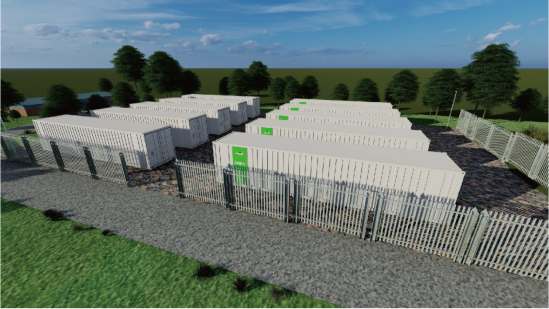
方舱采用标准化集装箱级箱体,具备保温、防腐、抗风化特性,可在田间、厂区、屋顶等多种场景快速部署,无需大规模土建。多舱联动时,各舱可分别执行菌丝培养、出菇、采收等不同阶段任务,形成流水线式连续生产;也可统一调度光伏与氢能资源,实现规模化产业园的集约化运营。废旧集装箱经改造后亦可作为方舱箱体,兼顾降本与循环经济。
Shelters adopt standardized container‑grade enclosures with thermal insulation, anti‑corrosion and weather‑resistant properties. They can be rapidly deployed on farmland, factory premises, rooftops and other sites without large‑scale civil engineering. Under multi‑shelter linkage, separate shelters can perform distinct tasks such as mycelium incubation, fruiting and harvesting to form assembly‑line continuous production. Photovoltaic and hydrogen‑energy resources can also be centrally dispatched for intensive operation of large‑scale industrial parks. Retired containers can be retrofitted as shelter housings, cutting costs while advancing circular‑economy objectives.
4.技术参数与综合效益对比
Technical Specifications and Comprehensive‑Benefit Comparison
对比维度 Comparison Dimension | 传统食用菌大棚 Traditional Edible‑Fungus Greenhouse | 良牧云光储氢方舱 Liangmuyun PV‑Storage‑Hydrogen Shelter |
单位面积产能 Output per unit area | 受季节与气候影响,年产约4—6茬 Subject to seasonal and climatic constraints; 4‑6 cropping cycles per year | 全年不间断生产,年产20茬以上,30㎡容纳4000+菌包 Non‑stop year‑round production; over 20 cropping cycles annually. 30 m² holds more than 4 000 mushroom bags |
能源结构 Energy structure | 以市电/燃煤为主,能耗成本高 Municipal power or coal‑fired; high energy costs | 光伏+储能+绿氢,自发自用,离网可运行 Photovoltaics + energy storage + green hydrogen; self‑generated self‑consumed power; operable off‑grid |
氢农业集成 Hydrogen‑agriculture integration | 无 Absent | 电解制氢+富氢水灌溉+氢气熏蒸,全链条集成 Full‑chain integration of electrolytic hydrogen production, hydrogen‑rich‑water irrigation and hydrogen fumigation |
环境控制 Environmental control | 人工经验为主,温湿度波动大 Reliant on empirical manual operation; large temperature‑humidity fluctuations | AI环控,五参数精准调控,手机远程管理 AI‑enabled environmental control; precise regulation of five parameters; mobile‑phone remote management |
抗逆与品质 Stress resistance & product quality | 杂菌污染率高,出菇整齐度不稳定 High contaminant‑fungi infection rate; inconsistent fruiting uniformit | 氢气抗氧化+密闭环境,杂菌率低,出菇整齐度高 Hydrogen‑mediated anti‑oxidation plus enclosed conditions; low contaminant‑fungi rate; high fruiting uniformity |
部署方式 Deployment mode | 需征地建棚,建设周期长 Land requisition and greenhouse construction required; long construction period | 标准化方舱,即装即用,可搬迁复用 Standardized shelters; plug‑and‑play; relocatable and reusable |
碳排放 Carbon emissions | 较高,依赖化石能源 High; fossil‑energy dependent | 绿氢替代,契合双碳与绿色低碳循环农业政策 Green‑hydrogen substitution; aligned with policies for green low‑carbon circular agriculture |
5.典型应用场景与推广价值
Typical Application Scenarios and Promotion Value
5.1适配场景Applicable Scenarios
县域食用菌产业园升级:以多舱联动替代传统分散菇房,提升标准化水平与产能稳定性。
乡村振兴示范项目:单个方舱即可作为村集体经营性资产,投资门槛可控、收益可预期,适合"强村公司"运营。
珍稀食用菌工厂化栽培:对环境要求严苛的松茸、羊肚菌、猴头菇等品种,方舱可精准复刻原生环境,降低露天种植风险。
低碳农业与碳中和农场:光储氢架构使方舱成为负碳或近零碳生产单元,可纳入碳汇交易与绿色金融体系。
研学与科普基地:集氢能、智慧农业、食用菌于一体的方舱,是农业新质生产力的直观展示窗口。
Upgrading of county‑level edible‑fungus industrial parks:Multi‑shelter linkage replaces scattered conventional mushroom houses to raise standardization and output stability.
Rural‑revitalization demonstration projects:A single shelter can serve as collective‑operational‑asset for villages. With controllable investment thresholds and predictable returns, it suits operation by village‑owned enterprises.
Industrial cultivation of rare edible fungi:For environmentally demanding varieties such as matsutake, morel and hericium erinaceus, shelters precisely replicate native growing conditions and mitigate risks of open‑field planting.
Low‑carbon agriculture and carbon‑neutral farms:The PV‑storage‑hydrogen architecture turns shelters into near‑zero‑carbon or carbon‑negative production units eligible for carbon‑sink trading and green‑finance schemes.
Research‑and‑study and science‑popularization bases:Shelters integrating hydrogen‑energy technology, smart agriculture and edible‑fungus production constitute intuitive showcases for new‑quality productive forces in agriculture.
5.2推广路径建议Recommendations for Promotion Pathways
申报省级示范项目:依托2026年山东省乡村振兴科技创新提振行动计划"农业新质生产力应用场景创新示范"方向,联合科研单位申报氢农业集成示范课题,获取政策与资金支持。
建设标杆示范基地:在食用菌主产县(区)布局1—2个多舱联动示范园,积累不同菇种的氢施用参数与产量品质数据,形成可推广的技术规程。
制定地方标准与技术规范:联合农业农村部门、行业协会制定《光储氢食用菌方舱建设与运营技术规范》,为规模化复制提供标准依据。
探索"装备+服务"模式:由企业提供方舱装备与运维服务,村集体或合作社负责种植与销售,降低农户技术门槛。
Apply for provincial‑level demonstration projects:Leverage the “innovation demonstration of application scenarios for new‑quality productive forces in agriculture” track under the 2026 Shandong Rural Revitalization Science and Technology Innovation Boost Action Plan. Partner with research institutes to submit proposals for integrated hydrogen‑agriculture demonstration topics to access policy support and funding.
Build benchmark demonstration bases:Deploy one or two multi‑shelter demonstration parks in major edible‑fungus producing counties or districts. Accumulate datasets on hydrogen‑application parameters, yield and quality for different mushroom species, and formulate promotable technical protocols.
Formulate local standards and technical specifications:Collaborate with agricultural‑and‑rural authorities and industry associations to develop the Technical Specification for Construction and Operation of Liangmuyun PV‑Storage‑Hydrogen Edible‑Fungus Shelters, furnishing standard foundations for large‑scale replication.
Explore the “equipment plus service” business model:Enterprises supply shelters and operation‑maintenance services, while village collectives or cooperatives undertake cultivation and sales to lower technical barriers for growers.
6.结语
Conclusion
氢农业从概念走向产业,关键在于找到一个"技术可集成、经济可算账、政策可对接"的落地载体。良牧云光储氢食用菌种植方舱以标准化方舱为壳、以光储氢为核、以智能环控为脑、以食用菌为锚,恰好回应了这一需求。随着山东省将氢农业纳入乡村振兴科技创新提振行动计划,这类集成装备有望成为农业新质生产力的典型应用场景,为山东乃至全国的绿色低碳农业转型提供可复制的"齐鲁方案"。
For hydrogen‑enabled agriculture to evolve from concept to industry, it must find implementation carriers featuring integrable technologies, viable economics and policy compatibility. The Liangmuyun PV‑Storage‑Hydrogen Edible‑Fungus Cultivation Shelter uses standardized shelters as its shell, PV‑storage‑hydrogen systems as its core, intelligent environmental‑control as its brain, and edible‑fungus cultivation as its anchor, exactly meeting such requirements. As Shandong province incorporates hydrogen‑enabled agriculture into its Rural Revitalization Science and Technology Innovation Boost Action Plan, such integrated facilities are poised to become typical application scenarios for new‑quality productive forces in agriculture, delivering a replicable “Qilu solution” for the transition toward green low‑carbon agriculture in Shandong and nationwide.
对于有意布局氢农业的地方政府、园区运营方和种植主体而言,当前正是政策窗口期:以示范项目验证技术、以标准规范扩大推广、以产业协同降低成本,方能在新一轮农业科技革命中抢占先机。
For local governments, park operators and growers planning hydrogen‑agriculture deployment, the current window of policy opportunity should be seized: validate technologies through demonstration projects, expand outreach via standards and specifications, and drive down costs through industrial collaboration, so as to seize the initiative in the new round of agricultural scientific‑and‑technological revolution.
【延伸阅读】
版权与免责声明:
凡注明稿件来源的内容均为转载稿或由企业用户注册发布,本网转载出于传递更多信息的目的,如转载稿涉及版权问题,请作者联系我们,同时对于用户评论等信息,本网并不意味着赞同其观点或证实其内容的真实性;
本文地址:http://www.h2fc.net/Technology/show-5133.html
转载本站原创文章请注明来源:中国氢能与燃料电池网
13811802542
(周一至周五 9:00-18:00)

氢能与燃料电池产业
微信扫描关注
 手机浏览网
手机浏览网